医疗城 · 设备实验室 · 第 8 台,共 69 台
体外膜肺氧合 (ECMO)
ECMO
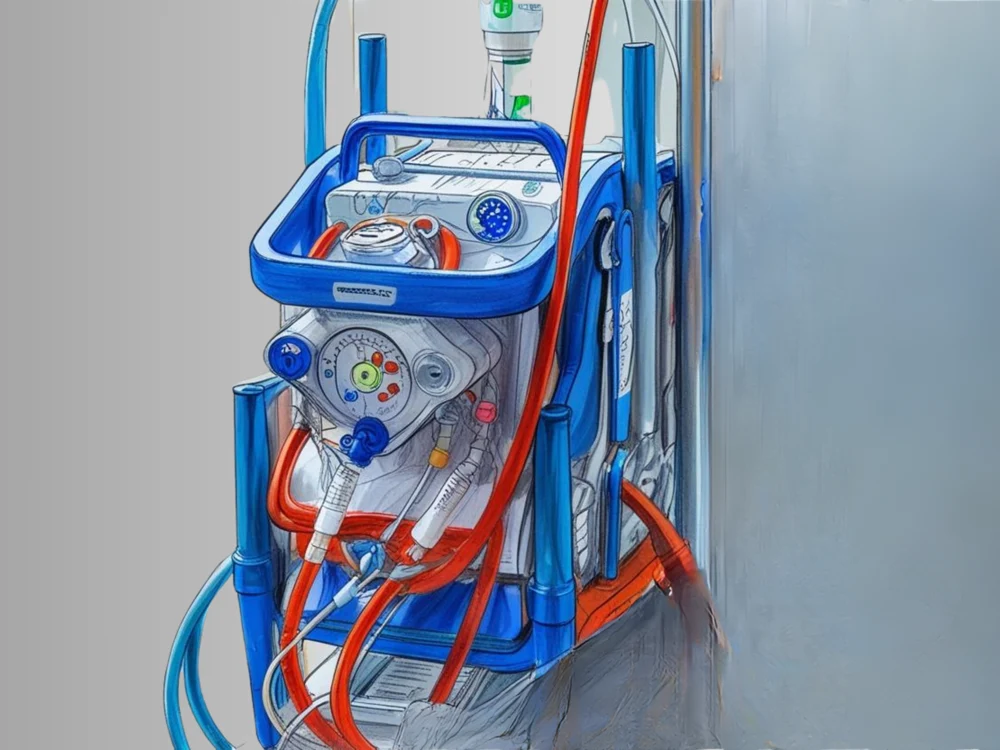
BMEssentia 医疗城设备实验室中的体外膜肺氧合 (ECMO)。以可交互 3D 打开设备,逐个部件拆解,了解其工作原理,然后在 BMEssentia 平台上系统学习,并向 Essentia 提问。
本页的设备实验室内容为英文,与医疗城中的内容一致。
- 10 个部件
- 设备实验室中有 2 种配置
- 又称: Extracorporeal Membrane Oxygenation
设备实验室
ECMO
Blood is drained from a vein and returned to a vein. The machine replaces the lungs and nothing else: the patient’s own heart still does all the pumping, and the one failure particular to this arrangement is the circuit treating its own blood instead of the patient’s.
配置
设备实验室中的各个版本。
Veno-venous ECMO
Blood is drained from a vein and returned to a vein. The machine replaces the lungs and nothing else: the patient’s own heart still does all the pumping, and the one failure particular to this arrangement is the circuit treating its own blood instead of the patient’s.
Veno-arterial ECMO
Blood is drained from a vein and returned to an artery. The machine replaces the lungs and the circulation both, which means it runs against whatever the heart is still doing, adds load to it, and starves the limb its return cannula occupies.
部件
逐个部件讲解。
Drainage cannula and access
A wide wire-reinforced tube in a femoral vein, with a pump on the end of it pulling. This is where the whole circuit begins and it is the one part of it that is inside a person for weeks at a time.
Circuit tubing and connectors
A few metres of coated plastic between a person and a machine, taped in loops, labelled with white wrap and inspected with a torch several times a day. It is the least impressive component here and the one that gets looked at most.
Centrifugal blood pump
A short red cylinder standing on the deck, spinning fast enough that its contents are thrown outward. It is the entire blood path of the pump and it is thrown away with the circuit.
Flow probe
A small clamp on the tubing just after the pump, with a cable back to the console. It is the only instrument on this machine that knows what is actually being delivered.
Pre-membrane pressure and gas
A transducer and a small sensor head on the line between the pump and the membrane. Together they describe what the pump is pushing into.
Membrane oxygenator
A flat diamond of translucent plastic bolted to the front of the cart, with blood crossing it one way and gas the other. It is the lung, and it is the component that decides how long this circuit lasts.
Air and oxygen blender
A small box on its own pole with two knobs, a flowmeter window and teal tubing running to it. It sets what the membrane is offered, and it is not part of the cart.
Heater-cooler and water circuit
A separate wheeled box standing beside the cart with two water lines running to the oxygenator. It never touches blood and it has caused more concern than most things that do.
Post-membrane pressure and gas
A transducer and a sensor head on the line leaving the membrane. Between them they describe what the patient is about to receive.
Console, controls and displays
A flat panel on the top deck with a row of coloured keys, two knobs and a small display. Everything this machine will tell you is on it and it is not very much.