المدينة الطبية · مختبر الأجهزة · الجهاز 14 من 69
المراقبة العصبية أثناء الجراحة
IONM
المراقبة العصبية أثناء الجراحة في مختبر الأجهزة في المدينة الطبية من BMEssentia. افتحه بتقنية ثلاثية الأبعاد تفاعلية، وفكّكه قطعةً قطعة، وتعرّف إلى طريقة عمله، ثم تعلّمه على منصة BMEssentia واسأل إسنشيا عنه.
محتوى مختبر الأجهزة في هذه الصفحة باللغة الإنجليزية، كما هو داخل المدينة الطبية.
- عدد الأجزاء: 10
- عدد التكوينات في مختبر الأجهزة: 2
- يُعرف أيضًا باسم: Intraoperative Neuromonitoring, Intraoperative Neurophysiological Monitoring
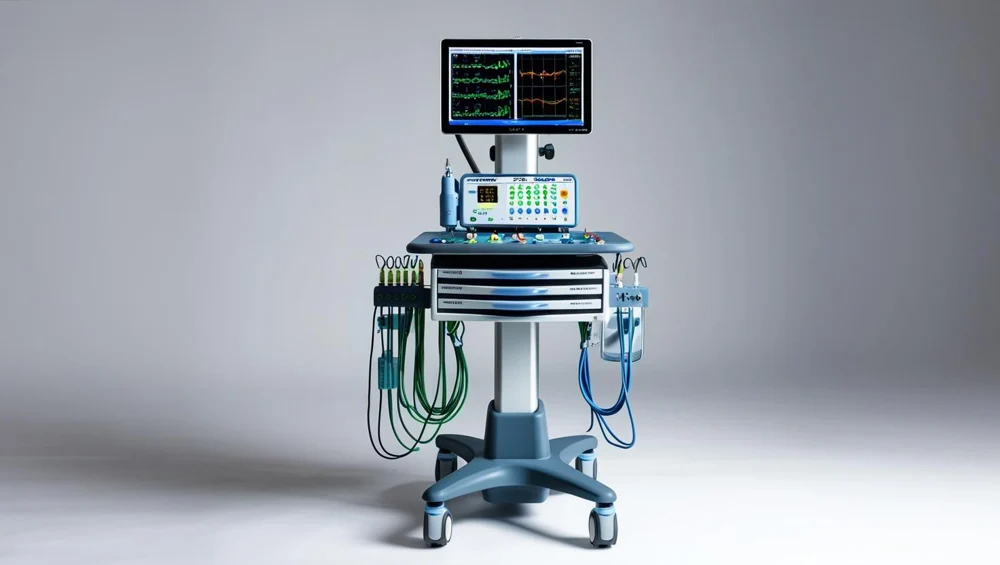
مختبر الأجهزة
IONM
A peripheral nerve is stimulated with a short constant-current pulse a few times a second, and the response is recorded from a scalp electrode pair against a reference. The response is about two microvolts and the ongoing activity it sits inside is about twelve, so nothing on the trace of a single sweep resembles a response at all. Hundreds of sweeps are averaged, a control channel closer to the stimulus confirms that the stimulus arrived, and contaminated sweeps are thrown away rather than averaged.
التكوينات
نسخ الجهاز في مختبر الأجهزة.
Averaged somatosensory channel
A peripheral nerve is stimulated with a short constant-current pulse a few times a second, and the response is recorded from a scalp electrode pair against a reference. The response is about two microvolts and the ongoing activity it sits inside is about twelve, so nothing on the trace of a single sweep resembles a response at all. Hundreds of sweeps are averaged, a control channel closer to the stimulus confirms that the stimulus arrived, and contaminated sweeps are thrown away rather than averaged.
Single-sweep motor channel
A short train of high-voltage pulses is delivered between two scalp electrodes and the response is recorded as a compound muscle action potential from electrode pairs in the limbs. That response is about six hundred microvolts, which is already fifty times the background, so one sweep is enough and nothing is averaged. A neuromuscular transmission monitor sits alongside it, because the last link in the chain this response travels along is a junction that anaesthesia can switch off.
كيف يعمل
استكشفه في مختبر الأجهزة.
The square root, and the time it is really a statement about
Hold everything else still and change only the number of recordings. Read the ratio the average achieves and the seconds it took to get there.
The one interferer averaging cannot touch
Set the stimulus rate so that the mains frequency divides by it exactly, and average as many recordings as you like. Then move the rate by a fraction of a hertz and average the same number.
The electrodes are the rejection, not the amplifier
Leave the amplifier alone and change only the difference between the two electrode impedances in a pair. Read how much of a common-mode interfering voltage arrives as apparent signal.
The area two wires enclose, and why no amplifier helps
Measure the length of the trunk run and the separation between its two conductors, and multiply. That is the area a changing field sees. Then compute the induced voltage from it and compare against the response the channel is trying to record.
What a discarded recording costs, in seconds
Set the fraction of recordings being discarded and read the time to a trustworthy answer. Then set it to three quarters and read it again.
الأجزاء
قطعةً قطعة.
Patient headbox and its numbered inputs
A small moulded box on a stand up by the patient, about the size of a paperback, with thirty-two numbered and colour-coded sockets in four rows across its face, one green socket on its own at the bottom, and a single thick connector on the end where everything leaves for the machine. It is the only part of this system anybody handles once an operation has started.
Electrode leads, their routing and the loop they enclose
Thirty-two fine insulated wires, each a different colour, running from an electrode on the patient to a socket on the headbox, gathered part way along into a loose bundle. Then one much thicker cable, the trunk, carrying all of them from the headbox down to the machine along a mat on the floor.
Electrode impedance meter and the imbalance it is looking for
A small module on the worktop with a two-line readout and a single test button, plus a row of indicators on the headbox itself so somebody at the patient can read the result without walking away. Pressing the button injects a tiny alternating current through each electrode in turn and reports what it took to do it.
Isolated differential biopotential amplifier
A shallow chassis on the cart shelf with one heavy connector on the front where the trunk cable plugs in, and inside it one amplifying stage per recording channel. It is the first thing in this machine that does anything to the signal, and the signal reaching it is a few microvolts.
Bandpass filter, and the notch that should not be used
A module inside the chassis with no controls on it, and one key on the front panel that switches in a narrow rejection at mains frequency. The key is there because somebody has to be able to reach it, and it carries a warning because they should not.
Sampling, anti-alias and the sweep window
A converter and its clock inside the chassis, and a legend on the front panel giving the sampling rate and the length of the recording window. Everything after this point in the machine is numbers, and everything before it is voltage.
Isolated stimulus generator and its compliance limit
A separate box on the shelf beside the chassis with two output ports on its face, a small readout, and a legend saying which quantity it holds constant. It is the only part of this machine that puts energy into the patient, and it is isolated from everything else for that reason.
Stimulus trigger, and why an average needs an exact one
A thin cable between the stimulus generator and the recording chassis, a plug at each end, and one small indicator on the front panel. It carries no signal from the patient and no information about anything except an instant.
The averager, and the square root it buys
A processor and a block of memory inside the chassis, a counter on the front panel showing how many recordings have gone in, and a panel on the worktop showing what the ratio has reached and how many more seconds a trustworthy answer is still going to take. It is the component that makes this machine possible and the one with no moving parts at all.
Artefact rejection and the sweeps it throws away
A control on the front panel setting a level, an indicator that lights while recordings are being discarded, and a panel on the worktop saying what fraction is going and what that fraction costs in seconds. It is the machine only honest answer to interference it cannot average away.
ملاحظات الطُّرز
طُرز حقيقية، بعد المراجعة.
Next