المدينة الطبية · مختبر الأجهزة · الجهاز 54 من 69
جهاز قياس ضغط الدم
Blood Pressure Monitor
جهاز قياس ضغط الدم في مختبر الأجهزة في المدينة الطبية من BMEssentia. افتحه بتقنية ثلاثية الأبعاد تفاعلية، وفكّكه قطعةً قطعة، وتعرّف إلى طريقة عمله، ثم تعلّمه على منصة BMEssentia واسأل إسنشيا عنه.
محتوى مختبر الأجهزة في هذه الصفحة باللغة الإنجليزية، كما هو داخل المدينة الطبية.
- عدد الأجزاء: 10
- عدد التكوينات في مختبر الأجهزة: 2
- يُعرف أيضًا باسم: Nibp, Sphygmomanometer
مختبر الأجهزة
Blood Pressure Monitor
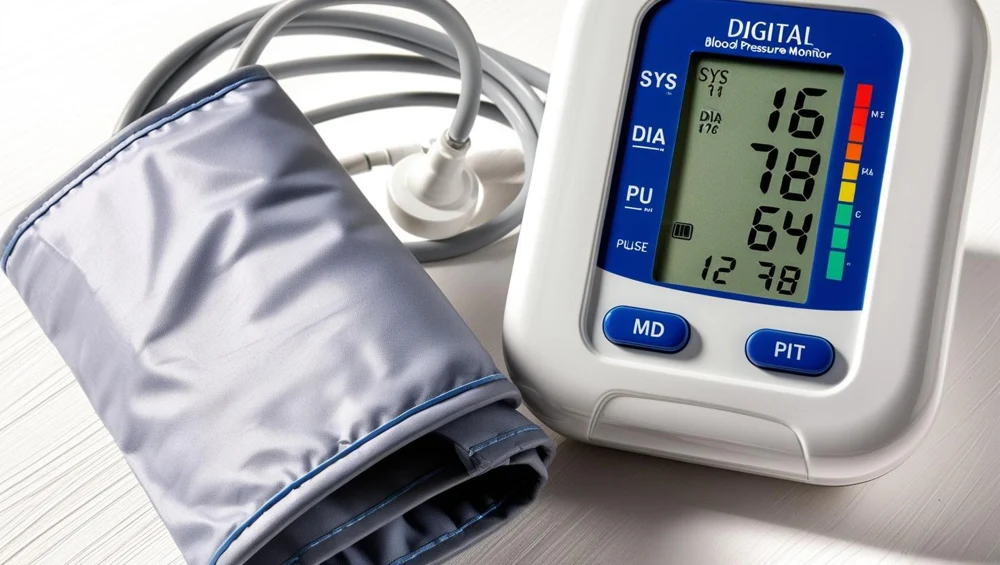
A boxed instrument on a stand with a motor pump, a solid-state pressure sensor, a servo-controlled bleed valve and a display of three numbers. It inflates the cuff above the point where the artery shuts, then lets the pressure down at a rate it holds constant, and watches the small pressure oscillation each beat puts into the cuff gas. The envelope of that oscillation peaks where the cuff pressure equals the mean arterial pressure, because that is where the artery is at its most compliant, and the systolic and diastolic figures are then read off the envelope at declared fractions of its peak.
التكوينات
نسخ الجهاز في مختبر الأجهزة.
Automatic oscillometric monitor, motor pump and servo bleed valve
A boxed instrument on a stand with a motor pump, a solid-state pressure sensor, a servo-controlled bleed valve and a display of three numbers. It inflates the cuff above the point where the artery shuts, then lets the pressure down at a rate it holds constant, and watches the small pressure oscillation each beat puts into the cuff gas. The envelope of that oscillation peaks where the cuff pressure equals the mean arterial pressure, because that is where the artery is at its most compliant, and the systolic and diastolic figures are then read off the envelope at declared fractions of its peak.
Manual aneroid sphygmomanometer with a stethoscope
An aneroid capsule behind a dial, a hand bulb with a non-return valve, a bleed screw and a stethoscope held over the brachial artery below the cuff. The cuff is inflated by hand above the point where the artery shuts and let down through the screw, and the observer marks the dial at the first sound and at the last. There is no electronics anywhere in the instrument and nothing in it records anything.
كيف يعمل
استكشفه في مختبر الأجهزة.
One ratio, and the limb radius cancelling out of it
Leave everything else alone and move only the limb circumference. Read the width ratio, the transmission ratio and the three reported pressures on the bench board. Then put the circumference back and move the cuff width instead, until the ratio returns to what it was.
An offset, a factor, and the subtraction that separates them
Set the limb fifteen centimetres below the datum and read all four quantities: the three reported pressures and their pulse pressure. Then set it fifteen above. Then put it back and make the cuff too narrow instead, and read the same four.
Where an envelope peak comes from, and where its flanks come from
This experiment needs the configuration that detects an oscillation. Read the envelope on the bench, find its peak, and compare the peak pressure against the mean the bench is set to. Then move the two fraction controls and watch two reported pressures change with nothing physical changing.
A fixed hole, and why it cannot hold a rate
This experiment needs the hand-operated configuration. Set the bleed screw so that the cuff falls at three millimetres of mercury a second at a hundred, then read the rate the bench reports at the systolic cuff pressure and at the diastolic one.
What a beat costs, and which way it costs it
On either configuration, raise the deflation rate and watch four things: the interval between beats in pressure, the number of beats inside the window, the reported pulse pressure, and the mid-point between the two reported pressures.
الأجزاء
قطعةً قطعة.
Cuff shell and the width that decides the error
A stiff rectangle of coated fabric, twelve centimetres across the part that matters and rather more than that across the whole of it, with a hemmed edge at each side and a bladder in a pocket inside. It is the only transducer this instrument has.
Inflatable bladder, its length and the wrap it makes
A flat rubber bag, welded round its edge, with a single port out of one face. Twenty-five centimetres long and twelve wide on a standard adult cuff.
Hook-and-loop closure, the index line and the range marks
A patch of hooks, a patch of loops, a metal D-ring at one end and a printed line with a window it is supposed to land inside. Six pence worth of parts, and between them they decide how much of the printed width is actually in contact with the limb.
Connecting tube, the connector and the gas volume behind it
Six hundred millimetres of small-bore tube with a push connector at each end. On one configuration it runs to a socket on a boxed instrument and on the other to a tee under a dial.
The upper arm, its measured circumference and the artery beneath it
An upper arm, thirty point four centimetres round on the body in this room, with a vessel running down the inner side of it at something like two and a half centimetres beneath the skin. It is half of the device and no part of it is manufactured, specified, calibrated or recorded anywhere.
Arm support and the height scale zeroed on heart level
A padded rest on a post with a graduated scale beside it, and the zero of that scale is placed at the heart datum measured on the body itself rather than at a height somebody chose. The pad holds the forearm.
Measurement chair, back support and footplate
A chair with a back, a pan at a real clinic height, four legs and a footplate. It is in the component list of a measuring instrument, which looks like a mistake until you notice that everything else in the room measures a pressure and this decides what pressure there is to measure.
Cuff size rack and the limb tape that chooses from it
A stand carrying five bladders on five pegs, from fifty-five millimetres wide to a hundred and ninety-two, each with a range of limb circumferences printed underneath it, and a tape measure on a hook at the end. It is the one idea of this device turned into furniture.
Calibration tee and the reference manometer
A brass tee, a short hose loop, a small rigid reservoir and a reference dial reading millimetres of mercury. It answers one question about this instrument completely, and the instructive part is which question that is.
Enlarged section of the applied pressure field, on its own stand
A cross-section of a limb on a plinth, drawn three times life size, with the cuff on top of it as a strip, the vessel marked at its measured depth, and six bands below the strip whose widths are the transmission ratio at six depths. It is a schematic on a stand and it says so on itself twice.
المحاكاة
أين يظهر في المحاكاة.
ملاحظات الطُّرز